
Goal Line Technology


Cairos GLT system

Hawk-Eye
Hawk-Eye's system uses six cameras, which are focused on both goals on either side of the pitch. By "triangulating" the ball, Hawkeye can provide a pinpoint location of the ball, determining if the ball has crossed the line within a second which is then sent as an encrypted radio signal to the referee's wristwatch indicating a goal.
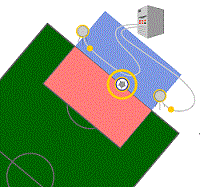
Pioneerd by the German company Carios Technologies AG and partnering with the multinational corporation Adidas, the GLT technology application uses a magnetic field to track the football which has a chip mounted in it. Thin cables with electrical current running through them are buried in the penalty box and behind the goal line to make a grid, sending a message to the referees watch if a signal is picked up from the magnetic field.
GoalRef uses a microchip implanted in the ball and the use of low magnetic waves around the goal. The system then detects any change in the magnetic field on or behind the goal-line to determine if a goal has been scored. The process takes less than one second, with the result electronically relayed to the referee.
Like Hawkeye, Goalminder uses high-speed cameras built into the goal posts and top cross bar to record images at 2000 frames per second and deliver visual evidence to the referee, in less than five seconds. Whilst this system does not send a message to the referees watch, it relies wholey on visual evidence, making it much more cheaper than other technologies.

GoalRef
Goalminder
Available Goal Line Technologies
The footballing world entered a new era as of the beginning of the 2013/14 season, when goal line technology was officially used for the first time in league matches. Currently, 4 predominant technologies are available for usage.